
The custom products market is expanding with each passing year.
A powerful combination of forces is driving this expansion.
AI-powered design tools, zero-inventory print-on-demand manufacturing, and the rise of social commerce have together dismantled every traditional barrier to entry.
And as a result, consumer appetite for customized products is accelerating across every category, region, and price point.
We’ll explore these forces in depth and unpack the data behind one of the world’s fastest-growing industries.
Table of Content
- Custom Products Industry Highlights
- What Are Custom Products?
- Global Custom Products Market Size (2026)
- Custom Products Market Growth Projections
- Which Regions Are Leading the Market
- The Biggest Custom Product Categories
- Growth Drivers in the Custom Products Space
- The Complete Market Size Picture of Custom Products
- Where Are the Biggest Opportunities
Custom Products Industry Highlights
- The global custom products market is estimated to be worth $190 billion in 2026.
- The custom products market is projected to reach $407 billion by 2034 at 10% CAGR.
- Custom promotional products is the single largest custom products category, worth $98 billion globally.
- Custom apparel is the second largest segment of custom products, valued at over $65 billion worldwide.
- Custom socks is the fastest-growing custom products category, expanding at a 14.5% annual rate.
- North America leads all regions with approximately 30% of global custom product spending.
- Asia-Pacific is the fastest-growing region, holding 28% of global custom product spending.
- AI design tools, print-on-demand manufacturing, and social commerce are key growth drivers for the rapid growth of the custom products market.
What Are Custom Products?
Before we get into the numbers, let’s define what we’re talking about.
A custom product is any physical item made to someone’s personal specification.
That could be a name engraved on a bracelet. A family photo printed on a blanket. A company logo stitched onto a jacket. Or a pair of trousers tailored to your exact waist and inseam.
The keyword is made for you — not picked off a shelf.
Custom products live in three broad tiers:
Tier 1 — Personalized Gifting (~$34B): Named, engraved, or photo items bought as gifts. Think custom mugs, photo cushions or engraved jewelry.
Tier 2 — All Made-to-Order Custom (~$190B): The full picture. Includes Tier 1 plus custom fashion, custom home decor, and B2B branded merchandise. This is the main focus of this report.
Tier 3 — Configurable Products (~$500B+): Any product with any customization option, including choosing IKEA furniture colors or picking a car trim level. Too broad to be useful for our purposes.
Throughout this report, we’re talking about Tier 2: the $190 billion mid-range definition that covers the commercially meaningful custom products universe.
Global Custom Products Market Size (2026)
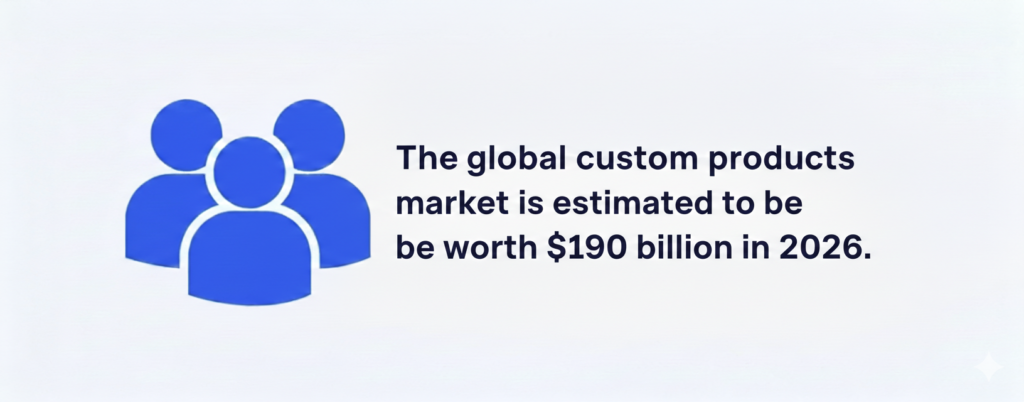
The global custom products market is estimated to be worth $190 billion in 2026.
The three biggest segments of the custom products market are:
Custom promotional products: $98 billion — branded merchandise that businesses give to customers and employees.
Custom apparel: $65+ billion — everything from made-to-measure trousers to custom hoodies to branded t-shirts.
Custom home decor: $35+ billion — custom wall art, wood products, blankets, curtains, and cushions.
Custom Products Market Growth Projections
By 2034, the custom products market is projected to grow to $407 billion at a compound annual growth rate (CAGR) of 10%.
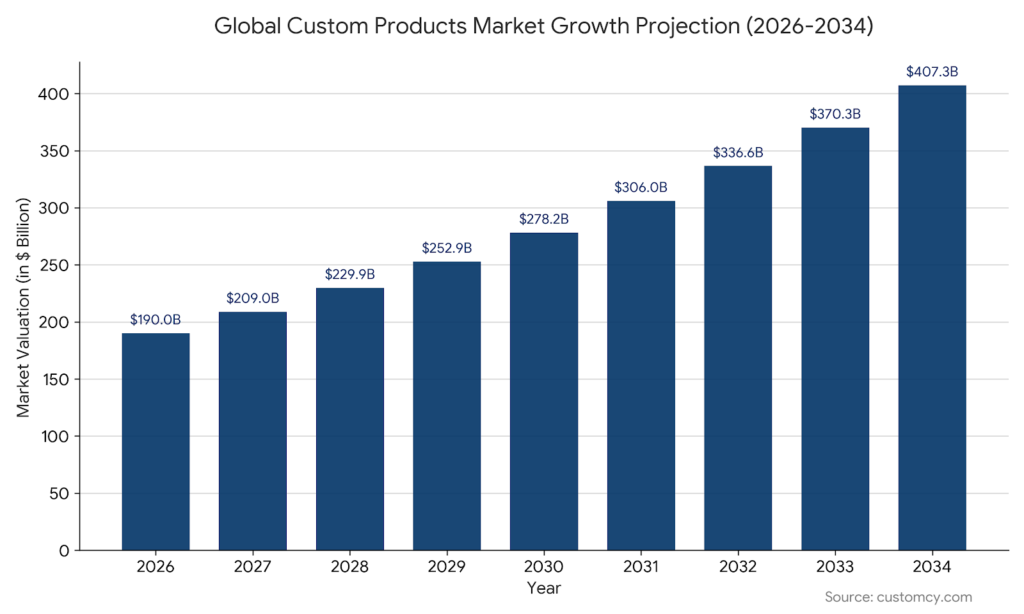
That’s not one fast-growing niche. That’s a structural shift in how people all over the world buy things.
| Year | Market Valuation Calculated Based on CAGR |
| 2026 | $190.00 billion |
| 2027 | $209.00 billion |
| 2028 | $229.90 billion |
| 2029 | $252.89 billion |
| 2030 | $278.18 billion |
| 2031 | $306.00 billion |
| 2032 | $336.60 billion |
| 2033 | $370.26 billion |
| 2034 | $407.28 billion |
Custom socks are the fastest-growing category of the custom product market and growing at a CAGR 14.5% from 2026 to 2034.
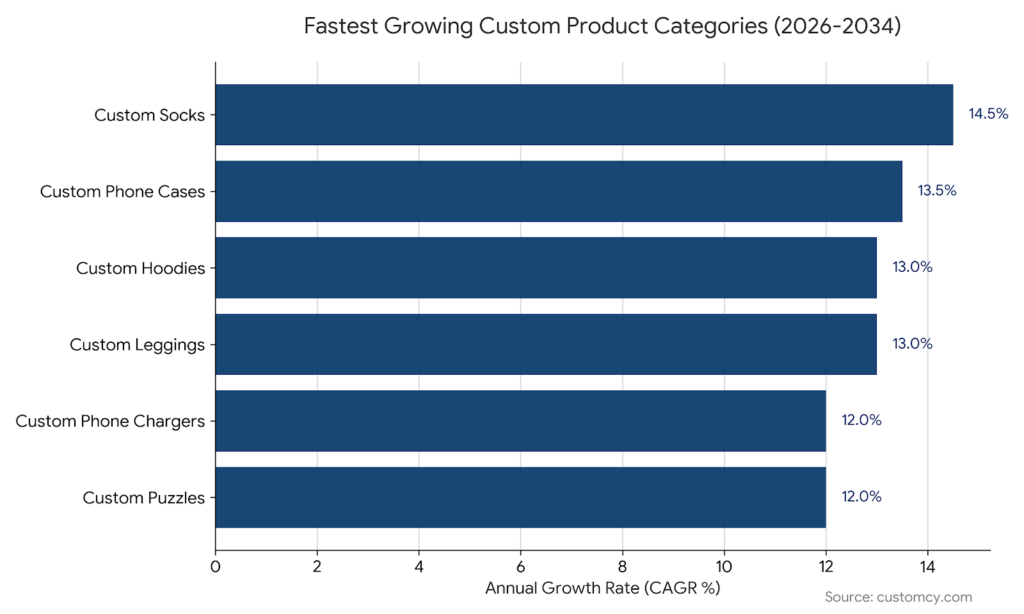
Below are fastest growing categories of the custom products market.
| Product | 2026 (Global) | 2034 (Projected) | CAGR |
|---|---|---|---|
| Custom Socks | $6.5B | $18.7B | 14.5% |
| Custom Phone Cases | $5.5B | $14.0B | 12–15% |
| Custom Phone Chargers | $1.2B | $3.0B | ~12% |
| Custom Puzzles | $950M | $2.4B | ~12% |
| Custom Hoodies | $4.7B | $12.3B | ~13% |
| Custom Leggings | $4.8B | $12.9B | ~13% |
| Custom Dog Bowls | $400M | $1.1B | ~13% |
| Custom Hats | $7.2B | $19.0B | ~11.5% |
| Custom Mugs | $5.5B | $13.8B | ~11.5% |
| Custom Pants | $15.5B | $32.3B | ~9.5% |
Which Regions Are Leading the Market?
Custom products are a global phenomenon. But some regions are bigger than others.
North America: The Market Leader
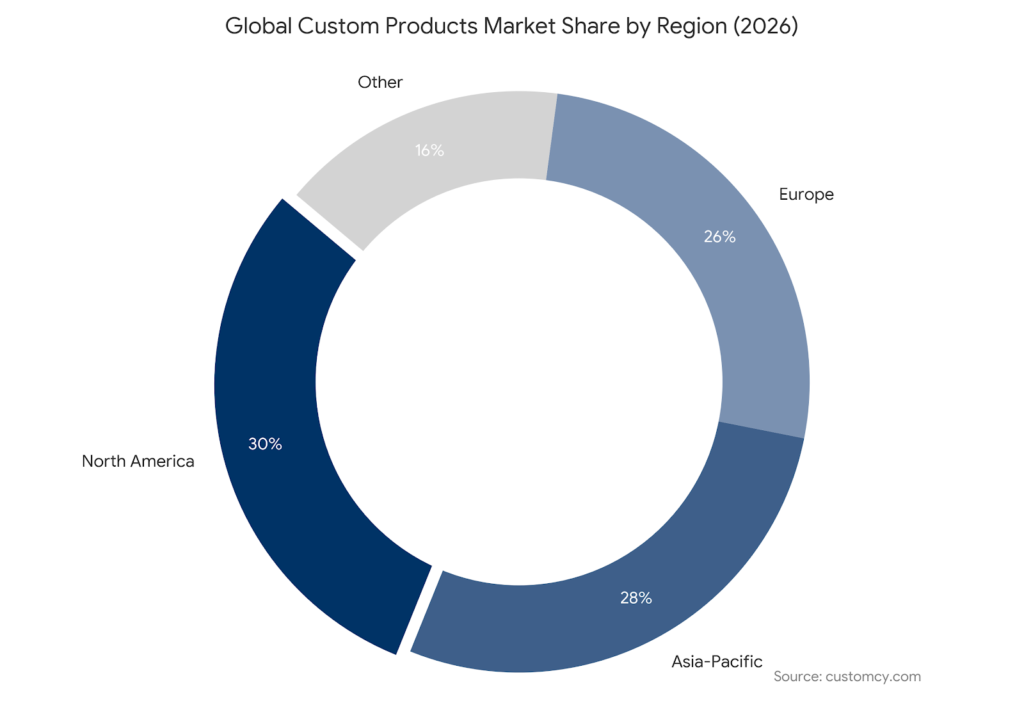
North America holds approximately 30% of global custom product spending — the largest share of any region.
The US drives most of this. It’s home to the world’s largest promotional products industry ($27.8 billion by itself), the deepest print-on-demand platform ecosystem, and the most active custom product entrepreneurship community on earth.
North America leads in 51% of the custom products market main categories, including custom hats (40% global share), custom sneakers (39%), custom hoodies (38%), and custom mugs (35%).
Asia-Pacific: The Fastest-Growing Region
Asia-Pacific holds about 28% of global custom product spending and is the fastest-growing region in almost every custom products category.
China and India bring massive manufacturing scale that makes custom production cheaper and faster than anywhere else.
Pakistan is also strengthening its position in the custom-products supply chain, with custom product manufacturers such as Customcy producing a range of custom goods for export and private-label clients.
Japan’s artisan culture drives demand for high-quality bespoke products, while South Korea — fueled by global K-pop influence — continues to stimulate worldwide demand for custom fashion and merchandise.
Europe: Sustainability-Driven Growth
Europe commands about 26% of global custom product spending, with the UK, Germany, and France as dominant markets.
Europe’s custom products story has a unique angle: regulation. The EU’s single-use plastic bag ban has made custom tote bags a legal requirement for many retailers — driving structural demand that doesn’t exist in other regions. Custom tote bags are the only product in our analysis where Europe leads global market share (30%), directly because of this regulatory tailwind.
Europe’s sustainability-first culture also drives premium demand for eco-certified custom water bottles, FSC-paper journals, and GOTS-organic cotton apparel — sub-segments growing at 7–8% vs. the global custom average of 10%.
The Biggest Custom Product Categories
Custom promotional products ($98B) are in a league of their own. This is the B2B engine that powers the whole market. Every business in the world buys branded merchandise — from a local restaurant ordering embroidered aprons to a Fortune 500 company ordering 50,000 branded water bottles for an annual conference.
Custom stationery ($21.5B) is surprisingly massive. Most people underestimate this one. But between corporate gifting, wedding stationery, and the global premium notebook trend, it’s the largest consumer-facing custom category.
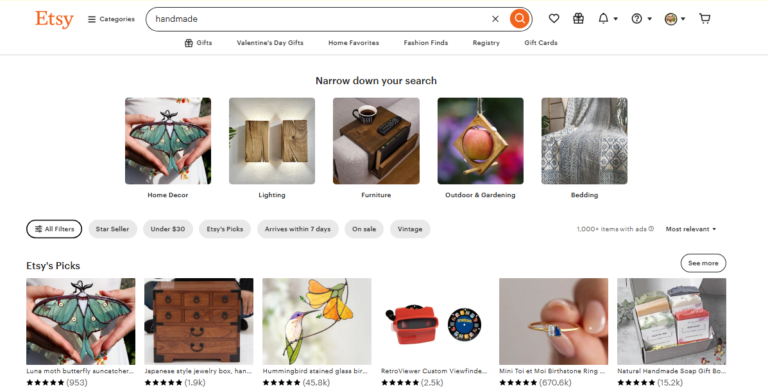
Custom handmade products ($21B) are everywhere and nowhere. No one platform owns this market. It’s 9 million Etsy sellers, local artisans, and custom commission artists operating in a beautifully fragmented ecosystem.
Top 5 custom product market categories by global market size in 2026:
| Category | Global 2026 | CAGR | Who Buys It |
|---|---|---|---|
| Custom Promo Products | $98B | ~5% | 95% B2B |
| Custom Stationery | $21.5B | ~7% | 55% B2B |
| Custom Handmade Products | $21.0B | ~10% | 85% B2C |
| Custom Pants | $15.5B | ~9.5% | 80% B2C |
| Custom Home Decor | $15.0B | ~9% | 80% B2C |
Growth Drivers in the Custom Products Space
There are five specific growth drivers behind rapid growth in the custom products maket
AI Made Custom Design Free
Three years ago, ordering a custom product meant either having design skills yourself or paying a graphic designer.
Today? You describe what you want, AI generates the design in seconds, and you order it.
Tools like Canva AI, Midjourney, Google’s Nano Banana, Sora, Adobe Firefly, and dozens of platform-native AI generators have made professional-quality custom design accessible to literally anyone. A 10-year-old can now design and order a custom hoodie, journal, or phone case that looks like it was made by a professional studio.
This is the single most powerful demand-expansion force in the entire custom products market. It permanently expands the addressable market to include the millions of consumers who previously wanted custom products but didn’t know what design to use.
Print-on-Demand Made Custom Production Free
Print-on-demand (POD) is a system where a product is only manufactured when someone orders it — no inventory, no upfront cost, no risk.
The global POD market is worth $15.19 billion in 2026 and growing at 25.05% per year — the fastest growth rate of any manufacturing model on earth.
POD platforms like Printful, Printify, and Gooten now cover 200+ product categories. Every new product added to POD creates a new custom products sub-market. Custom socks, custom cushions, and custom puzzles all saw explosive growth after being added to major POD catalogs.
The bottom line: the manufacturing barrier to selling custom products has effectively been eliminated.
Consumers Have Made Personalization Non-Negotiable
This market isn’t growing because companies decided to offer customization. It’s growing because consumers demanded it — and started voting with their wallets.
Roughly 70% of consumers prefer customized products over standard ones. When customization is available, 59% of online shoppers are more likely to buy.
One in five will pay a 20% premium for it, and 48% will wait longer to receive it. Among 18–24-year-olds, 37% have already personalized a clothing item. Personalization doesn’t just close a sale. It creates a fundamentally different customer relationship.
Social Commerce Created a Distribution Revolution
Ten years ago, a small custom product maker in Pakistan had no way to sell to customers in Germany.
Today, a single viral TikTok can sell 10,000 custom bracelets overnight to buyers on six continents.
Social commerce platforms — TikTok Shop, Instagram Shopping, Pinterest Shopping — have given custom product sellers global distribution with zero marketing budget required. Combined with Etsy’s 9 million global sellers and Amazon Handmade’s fast-growing custom marketplace, the distribution side of custom products has been democratized as thoroughly as the production side.
Businesses Are Upgrading Their Swag
This one matters more than people think.
The global corporate branded merchandise market is worth $98 billion. And it’s going through a quality revolution.
Companies used to order cheap pens and stress balls. Now they order premium custom water bottles ($45 each), laser-engraved bamboo wireless chargers ($65 each), and GOTS-certified organic cotton tote bags ($18 each).
This shift — from commodity to premium — is driving revenue growth at 2–3× the rate of unit volume growth. Even as companies buy fewer items, they’re spending more per item. EU ESG reporting requirements and corporate sustainability mandates are accelerating this trend in every major market.
The Complete Market Size Picture of Custom Products
The B2B Powerhouse
This group is the engine of the entire industry. Businesses buy. Businesses brand. Businesses drive the numbers.
Custom promotional products dominate everything at $98 billion in 2026, growing to $145 billion by 2034 at 5% annually. This single category is larger than the next four groups combined. Every organization on earth buys branded merchandise — making this the most structurally resilient market in the series.
Custom tote bags are the surprise standout at $5.5 billion, heading to $12.4 billion by 2034 at 10.5% CAGR. Europe leads globally at 30% share — the only category where the EU beats North America — because regulatory plastic bag bans created mandatory demand that doesn’t exist elsewhere.
Custom water bottles are worth $4.2 billion today, projected at $9.6 billion by 2034 at 11% annually. Premium branded bottles ($35–75 each) are replacing pens as the default corporate gift — ESG procurement mandates are making this a budget line item, not a discretionary spend.
| Category | 2026 Size | CAGR | 2034 Projection | Primary Buyer |
| Custom Promotional Products | $98B | 5% | $145B | 100% B2B |
| Custom Tote Bags | $5.5B | 10.5% | $12.4B | 58% B2B |
| Custom Water Bottles | $4.2B | 11% | $9.6B | 60% B2B |
| Custom Phone Chargers | $1.2B | 12% | $3.0B | 90% B2 |
Custom Apparel
The category everyone thinks of first — and the one growing fastest at the bottom of the price stack.
Custom socks are the breakout story at $6.5 billion, projected to reach $18.7 billion by 2034 — a 14.5% CAGR, the fastest of any apparel category in this analysis. The B2B promo channel discovered branded socks get 4–5× higher response rates than pens. Simultaneously, photo socks went viral B2C. Two demand streams accelerating at the same time is rare.
Custom t-shirts stand at $7.7 billion today, growing at 11% annually to $17.5 billion by 2034. The most volume-balanced category in the series — 56% B2B (sports teams, corporate events) and 44% B2C (creator merch, personal expression) — meaning no single channel disruption kills the market.
Custom hats sit at $7.2 billion, hitting $19 billion by 2034 at 11.5% per year. North America holds 40% of global share — the highest regional concentration of any apparel category — anchored by sports team culture, college athletics, and corporate branded programs.
| Category | 2026 Size | CAGR | 2034 Projection | Fastest-Growing Region |
| Custom T-Shirts | $7.7B | 11% | $17.5B | Asia-Pacific (38%) |
| Custom Hats | $7.2B | 11.5% | $19.0B | North America (40%) |
| Custom Socks | $6.5B | 14.5% | $18.7B | North America (32%) |
| Custom Hoodies | $4.7B | 13% | $12.3B | North America (38%) |
| Custom Leggings | $4.8B | 13% | $12.9B | North America (33%) |
| Custom Pants | $15.5B | 9.5% | $32.3B | $65–$400+ |
| Custom Jackets | $14.5B | 10% | $31.2B | $150–$500+ |
| Custom Sneakers | $4.8B | 10% | $10.3B | $80–$250 |
| Custom Skirts | $1.5B | 11% | $3.4B | $45–$150 |
| Custom Aprons | $2.0B | 11% | $4.6B | $25–$80 |
Custom Home & Living
The nesting economy turned permanent — and custom home is the direct beneficiary.
Custom wall art leads at $13.4 billion in 2026, reaching $29 billion by 2034 at 10% annually. North America holds 35% of global share, driven by the world’s deepest online art platform ecosystem.
Custom wood products stand at $12 billion, growing at 9% to $23.9 billion by 2034. Desktop laser engravers now under $500 created 500,000+ US micro-manufacturers — the world’s densest custom wood maker ecosystem by population. 45% of consumers now actively prefer custom-made wood items over mass-produced equivalents.
Custom curtains are a $3.4 billion market — the most functionally necessary category in this study. Non-standard windows (bay, arched, floor-to-ceiling) make custom the only option for millions of buyers, creating demand that is structurally resistant to recessions.
| Category | 2026 Size | CAGR | 2034 Projection | Key Driver |
| Custom Wall Art | $13.4B | 10% | $29.0B | AR visualization unlock |
| Custom Wood Products | $12.0B | 9% | $23.9B | Desktop laser engravers |
| Custom Curtains | $3.4B | 10% | $7.3B | Functional necessity |
| Custom Blankets | $2.7B | 11% | $6.2B | Memorial gifting |
| Custom Cushions | $2.5B | 11% | $5.7B | #1 POD home item |
| Custom Towels | $1.9B | 9% | $3.8B | Hotel recurring demand |
Custom Jewelry & Personal Accessories
The most emotionally driven group in the analysis — and the one with the most concentrated US demand.
Custom jewelry leads at $12 billion in 2026, projected at $23.9 billion by 2034 at 9% annually. The US accounts for 29% of the global market despite being 4% of world population — anchored by the engagement ring customization tradition, where 69% of American buyers choose custom settings.
Custom phone cases are a $5.5 billion market growing at 12–15% annually to $14 billion by 2034 — the highest growth range of any accessory category. AI design tools permanently expanded the addressable market: any consumer can now describe a design, get a professional result instantly, and order within minutes.
Custom stickers stand at $5.3 billion, growing at 8% to $9.8 billion by 2034. Three independent demand streams accelerating simultaneously: influencer merch packs, small business shipment inserts, and B2C gifting. North America holds 40% of global share — highest US concentration of any non-jewelry category in the series.
| Category | 2026 Size | CAGR | 2034 Projection | B2C Share |
| Custom Jewelry | $12.0B | 9% | $23.9B | 97% |
| Custom Phone Cases | $5.5B | 12–15% | $14.0B | 75% |
| Custom Stickers | $5.3B | 8% | $9.8B | 65% |
| Custom Keychains | $5.0B | 7–9% | $9.2B | 30% |
| Custom Pendant | $3.5B | 10% | $7.5B | 97% |
| Custom Bracelets | $3.0B | 11% | $6.9B | 97% |
| Custom Earrings | $2.0B | 11% | $4.6B | 97% |
Custom Paper, Craft & Handmade
The analog renaissance in numbers — and it’s bigger than most people realize.
Custom stationery is the largest consumer-facing custom category most analysts overlook — worth $21.5 billion in 2026, reaching $37 billion by 2034 at 7% annually. Corporate gifting, wedding stationery ($1.2B+ in the US alone), and the premium notebook movement combine to make this a structurally deep market with multiple independent demand floors.
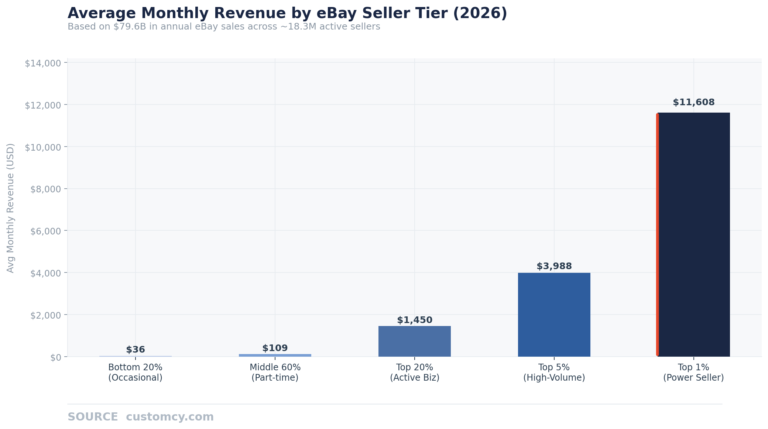
Custom handmade products sit at $21 billion, growing at 10% annually to $45 billion by 2034 — one of the fastest absolute-dollar growth rates in the analysis. Etsy’s 8.1 million global sellers averaging $35,583 per year prove the commercial viability of the artisan channel at global scale.
Custom journals are worth $2.5 billion today, doubling to $5.4 billion by 2034 at 10% per year. The 32% custom penetration rate — highest of any stationery sub-product — reflects how inherently personal a journal is. Corporate onboarding kits with employee-name-embossed journals are now standard at tech companies and consulting firms competing for talent.
| Category | 2026 Size | CAGR | 2034 Projection | Custom Penetration |
| Custom Stationery | $21.5B | 7% | $37.0B | 28% |
| Custom Handmade Products | $21.0B | 10% | $45.0B | Artisan-native |
| Custom Journals | $2.5B | 10% | $5.4B | 32% |
Custom Gifting & Novelty
The occasion-driven categories — bought for someone else, often on a deadline.
Custom mugs are the most occasion-versatile product in the entire analysis — worth $5.5 billion in 2026, reaching $13.8 billion by 2034 at 11.5% annually. Fifteen-plus distinct gifting occasions (birthdays, Valentine’s Day, Mother’s Day, graduation) sustain demand year-round with no single seasonal dependency.
Custom toys stand at $2.3 billion, growing at 11% to $5.3 billion by 2034. The lowest custom penetration rate in the study — just 3% — also means the most upside remaining. Build-A-Bear’s $450M+ US revenue proves the model at national scale. AI character design tools are about to collapse the $120 custom plush price point to $45–65, opening a mass-market tier with no current dominant player.
Custom dog bowls are the smallest category here at $400 million — but growing at 13% annually to $1.1 billion by 2034, they are one of the fastest-growing in the entire series. AI-generated pet portrait bowls are explicitly cited as the #1 emerging POD niche for 2026 across multiple platform sources, and at 3% custom penetration, the upside is enormous.
| Category | 2026 Size | CAGR | 2034 Projection | Gifting Share |
| Custom Mugs | $5.5B | 11.5% | $13.8B | 45% B2C gifting |
| Custom Toys | $2.3B | 11% | $5.3B | 85% B2C |
| Custom Puzzles | $950M | 12% | $2.4B | 95% B2C |
| Custom Flags | $1.1B | 9% | $2.2B | 35% B2C |
| Custom Dog Bowls | $400M | 13% | $1.1B | 92% B2C |
Where Are the Biggest Opportunities?
The custom products market is huge. But not all of it is equally easy to enter.
Based on the data, here are the most compelling white spaces globally:
Mid-market custom jewelry ($200–$800 price tier): The $12 billion custom jewelry market has a gap between mass Etsy engraving ($30–80) and luxury jewelers ($2,000+). No brand currently owns the premium-affordable middle. An AI-powered custom jewelry platform combining 3D visualization, ethical sourcing certification, and 10-day fulfillment could capture this gap.
AI-to-custom-plush ($45–65 per item): Parent describes a character → AI generates design → custom stuffed animal ships in 5 days. Budsies has proven the concept at $120. Nobody has scaled it with AI to mass-market pricing yet.
Premium sustainable B2B merchandise platform: The $98 billion promotional products market is premiumizing. No platform has built a curated, eco-certified, ESG-reporting-enabled procurement experience for mid-market companies at scale.
Subscription custom gifting: Custom puzzles (18% annual growth in photo puzzle sales), custom stickers, and custom blankets all show consumer appetite for recurring custom products. A subscription service using AI to generate monthly custom items from a user’s photo library has no dominant incumbent.
AR custom wall art configurator: Point your phone at a wall. See exactly how custom art looks in your space. Order in-app. The $13.4B custom wall art market’s #1 friction point — “I can’t tell how it’ll look” — is an unsolved problem waiting for an AR-native solution.
The Bottom Line
The global custom products market is not a trend. It’s not a niche. It’s not a fad driven by one generation.
It’s a $190 billion structural shift in how the world makes and buys physical objects.
By 2034, the market will be worth $407 billion — more than double its 2026 size. One thing is clear from this report: when you give people the ability to make something specifically for them, at a price they can afford, they choose it every time.
That’s the custom products market. And it’s just getting started.
About This Report & Methodology
The estimates in this report are produced by Customcy.com using a three-method triangulation protocol applied to each of the custom product category analyzed. Every figure is cross-validated using a top-down market approach, a bottom-up segment build, and a print-on-demand proxy check. A minimum of six primary sources were consulted per category, weighted by a five-tier credibility hierarchy.
The $190 billion aggregate is built bottom-up from individually sized categories — not by summing segment groupings, which would overstate the total due to known overlap between the promotional products figure and individual product categories. All figures are nominal USD 2026. Real growth rates are approximately 3–4 percentage points lower per year than the nominal CAGRs stated in this report.
For the full source list, confidence ratings, triangulation examples, and 110+ clickable references, see the companion document:
📄Research Methodology & Technical Appendix — Global Custom Products Market